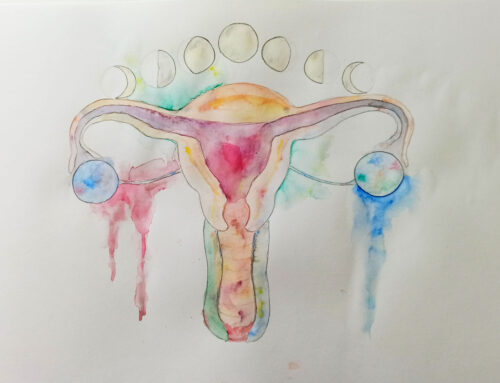




How to prepare and aftercare for outpatient gynaecological surgery
As I was about to have my first (outpatient) gynaecological procedure and lay on the hospital bed in my little cubicle waiting for my turn, there were a million questions running through my head:
How long would the procedure take? Would I have to be intubated during anaesthesia? How were they going to cauterise the incision from the removed polyp? Would there be stitches? What other procedures might become necessary during the intervention that I would only know about upon waking up?
I had totally forgotten to ask …
Or rather, these questions had just dawned on me as the day came closer and I fully realised what I would be going through (but without the chance to get a second consultation and ask them all.)
While I had prepared my clients for surgery before, I had completely forgotten to take my own advice until I lay there, butt naked in the hospital gown, cap on my head, about to be taken into the operating room.
And since I like to make the best out of every situation, I thought I could at least write this little piece, so you can learn from my mistakes and think about all the questions you might want to ask and all the things you might want to prepare before undergoing outpatient gynaecological surgery :-)

In my case, the procedure was a hysteroscopy including the removal of a cervical polyp. But through listening to the other outpatients around me and my own research, I learned that there’s a number of interventions that can be done in an outpatient setting, nowadays.
While what you will go through may be different to my situation, I believe this little guide will be useful preparation and aftercare for any of the following procedures:
- Diagnostic hysteroscopy (examination of the uterine cavity through a tiny telescope inserted through the cervix)
- Surgical hysteroscopy (removal of polyps (usually benign tissue growths) and other irregularities from the uterine cavity or cervix, through the cervix)
- Curettage / endometrial ablation (partial removal of endometrial lining for diagnostic evaluation or treatment purposes)
- Insertion of intrauterine devices (IUD) for contraceptive purposes
- Abortion
- Sterilisation
- Diagnostic laparoscopy (examination of uterus, ovaries and/or fallopian tubes through a tiny camera inserted through a small incision in the abdomen, e.g. to assess possible menstrual health challenges or unexplained infertility)
- Surgical laparoscopy (removal of polyps, cysts, fibroids, adhesions or even endometrial lesions from uterus, ovaries or abdominal organs through several small incisions in the abdomen)
Preparation
Play it through beforehand
To avoid laying there like me and thinking of all the questions you could/should/would have wanted to ask beforehand (but didn’t know you had), take your time playing the whole thing through in your mind – ideally once you know that you will have a procedure and before the pre-surgery consultation with your surgeon.
Imagine your journey from entering the practice on the day of surgery, until being picked up and leaving it again after the procedure, and write down all your questions about any step along the way!
In the consultation itself, make sure you clearly understand the details of the procedure and any possible restrictions and after-effects you might experience, to mentally and physically prepare yourself and get support in place.
Depending on the procedure, here are a couple of questions for inspiration:
- What is going to happen after you enter the practice on the day of your surgery? Where will you be taken, will you get a private space to undress and ground, what needs to be taken care of before the procedure starts?
- What are the exact steps that are planned for the procedure and how long is it expected to take?
- Is there anything else they might spontaneously decide to do while you’re unconscious, depending on the findings?
- What kind of anaesthesia will you get and how will breathing be assisted (respiratory mask, intubation etc.)?
- Will they use gas to inflate the uterus or abdomen for better access? (If so, prepare well for aftercare, see below.)
- Will they use fluids to flush inside? (Good to know, to make sure your lymphatic system is up to par, to help your body release the chemicals afterwards.)
- If they remove anything (e.g. polyps, cysts, tissue growths), how will they cauterise? Will they stitch up the wound(s)?
- How does the wake-up procedure work, will you be left alone to wake up in your own time, will they check in on you, is there a time limit on how long you can stay to wake up fully and get your circulation back on track?
- How long is the typical recovery period?
- What kind of restrictions will there be the first couple of days/weeks (e.g. no showering, no bathing, no sports etc.)?
- If applicable: How many days of bleeding is normal and when should you check back in?
My best advice: Be annoying! ;-)
No question is too small or insignificant to ask – the more you know about what’s going to happen every step of the way, the more your nervous system can relax and trust the process, and the smoother your recovery will be!
Be aware that doctors and staff are usually trained to be very efficient and will probably only explain the bare minimum they have to (a quick overview of the procedure, including the risks). In my experience, though, they are very forthcoming when you bring your questions and are willing to answer them all – as long as you have them ready the moment when they have time for you.
So I want to reiterate how important it is to make sure you have enough time and space to yourself at home for any questions to arise as you prepare. Maybe they will only come up after the pre-surgery consultation, then make sure you have a chance to ask the staff or get a second consult to get them answered as well.
Have a gut check
After your pre-surgery consultation, ideally when you’re back home or in a different environment, have a gut check:
Does the practice feel like a safe place to be, for you and your body? Do you feel well cared for and tended to from the beginning? Does the staff seem friendly and accommodating?
Don’t be afraid to change the doctor or practice if you don’t feel safe and comfortable (enough) with them! Remember: The safer and more comfortable you feel, the smoother your recovery will be!
Prepare for recovery before the procedure
Preparing your body, heart, mind and soul before the procedure will directly influence the duration and quality of your recovery.
Double down on the essentials:
- Breathing: Practice functional breathing to oxygenate your body, gently massage your abdominal organs and relax your nervous system.
This will not only help your body prepare, but also come in handy on the day of surgery for any tough situation you might encounter. For example, when I lay on the bed with my racing thoughts, I could ground myself somewhat by focusing on my breathing. And it helped me breathe through the strange feeling and taste in my mouth when the narcotics kicked in. - Hydration: You won’t be allowed to drink anything at least two hours prior to arriving in the practice (to prevent fluids running into your lungs during anaesthesia), so make sure to hydrate well the day(s) before. This will also help flush out the chemicals and narcotics after surgery.
Having two mugs of herbal tea at 9pm the day before my intervention meant I had to go to the bathroom during the night, but I felt great and hydrated, ready for surgery the next morning. - Lymphatics: If you don’t regularly stimulate and tend to your lymphatic system yet, it’s helpful to get it up and running a couple of days, better weeks, before the actual procedure.
If you have never had lymphatic drainage before or don’t have your own routine, simply start by massaging your whole body from the feet all the way up to your head and neck. This will both give your body some loving touch, letting it know you will care for it as it cares for you, as well be a very gentle activation of your lymphatic system that won’t lead to detox symptoms. - Connection with your womb space: Take some time to yourself, prepare a cosy nook and sit down to connect with your womb space and ask its permission for the surgery. Or simply communicate with it, explaining why this procedure is necessary and that it would be helpful to have it (her?) on board, so you’re both in the same boat.
If you’ve never connected to your womb space before, this might feel really strange, and there is no right or wrong way to go about it. Just trust what comes up in the moment. - Emotions: Either through the womb connection practice or because of all the thoughts you will have about the procedure, there might be all sorts of difficult emotions coming up for you.
Find a safe way (safe for yourself and others) to be with and release what’s coming, e.g. crying/weeping, punching pillows, howling (into a pillow if you’ve got neighbours) etc. It is totally normal and expected to go through the motions with such a major intervention!
Preparations at work
If your surgery isn’t on a Monday, take off the day before, if you can. This will give you time to make last minute preparations and to be with whatever thoughts or emotions arise as “the day” approaches.
If you are in employment, see how much time you can take off for recovery after the procedure. In case your country issues certificates for leave from work, ask the doctor how many days you will be on sick leave. Depending on the relationship with your boss and/or colleagues, you might want to inform them that you’re going to be out for a while.
If your country doesn’t offer any support like this, see if you can take some days off yourself or work some overtime in advance that you can use up in the first couple of days after the procedure.
If you are self-employed, make sure you don’t have any appointments, client work or other commitments during at least the first week after surgery.
See if there’s anything else you need to have in place, work- or life-wise, to free your schedule and ease your mind after surgery.
Preparations at home
Make sure you won’t need to cook yourself for the first couple of days. Have enough food in the fridge and pantry and either ask a family member to cook for you or have some pre-cooked or easy-to-cook meals for 2-3 days.
Clean and/or tidy the house in advance, so you won’t have the urge to do that when you’re fresh out of surgery.
Prepare to have someone around the first 1-2 days – that could be a family member or a friend you ask to come over, to have some additional support should you need it.
Pack a (small) bag for the day of surgery:
- A bottle of water to drink after surgery
- A pair of socks or extra blanket if you easily feel cold (I remember having a hard time warming up even underneath the blanket of the hospital bed)
- Sanitary supplies – ideally, use re-usable/washable pads or period panties (or at least organic, non-toxic sanitary pads) to make sure your sensitive, permeable genital skin doesn’t absorb more toxins and chemicals than necessary. You will not be allowed tampons until you’re fully healed!
- Anything else you feel will be helpful as you wait for the procedure to happen (grounding music, guided meditations, a calming essential oil to smell, …)
- A small cushion to protect your tender abdomen from the seatbelt in the car on your drive home
The day of Surgery
In the morning
The last meal should be at least 8 hours prior to arriving in the practice, ideally eat the last thing no later than 8pm the day before. Stop drinking water (or anything else, for that matter) at least two hours prior to arriving at the practice.
Don’t use creams, make-up or perfume, come in as “natural” as you possibly can.
Take off any jewellery (rings, earrings, piercings etc.) and dress in comfy, loose-fitting clothes. You will likely experience some abdominal tenderness or cramping and don’t want to restrict your body and breathing space.
Don’t forget your bag and you’re good to go!
In the wake-up room
Once you’re in the wake-up room/back in your cubicle and regain consciousness, TAKE YOUR TIME!!!
There’s no haste to get out of there, no pressure to get up. Allow your cardiovascular system to fully come back online after the anaesthesia – just make sure you’re warm and comfortable while you slowly wake up.
Only when you FEEL like it (not when you “think you should”), sit up and take a first sip of water, no pushing. Every body has its own pace! Just drink a couple of sips and wait how your body adjusts to the water, don’t drink too much too soon, or you might throw up.
When you feel like you’ve recovered enough to leave – stay another half hour ;-)
When you leave, make sure you don’t have to walk very far or exert yourself – this can backfire and you might collapse (speaking from experience here ;-)).
Once you’re back home, listen to your body: Sit or lie down some more. Have a snack. Take painkillers if you need!
Again, this is not a race and you won’t get a trophy for the fastest recovery ;-)! Allow your body to recover and heal in its own time and try to give yourself as much rest as you can.
After-Care
If they have used gas to inflate the abdomen or uterus, some of it will still be in the uterine or abdominal cavity and only be absorbed into your blood stream or your lungs and transported out of the body over time. Gentle massage like described before, maybe with a drop of peppermint essential oil, will help it get moving.
Note: It is possible that the internal abdominal pressure from the gas will restrict your breathing or feel like you’re having a heart attack, so start supporting your body right on arriving home. You could also drink peppermint tea (ideally loose, organic peppermint leaves, not bags, as they often contain synthetic fibres) to help the digestion, processing and elimination of the gas.
Apart from that: Go slow – literally!
Move around slowly and deliberately. It is entirely possible that the first day feels like you’re fine and then you sleep and fully digest and flush out the narcotics and suddenly you feel more sluggish and fuzzy than right after surgery. That is okay and no reason for worry (it happened to me)!
Give yourself time, rest up, drink lots of water or herbal tea and eat light, nutrient-dense food.
Use some lovely natural body oil (maybe with a drop of an essential oil you like) and gently rub and massage your body over the next couple of days. Slowly reacquaint yourself with your lower belly and connect with your womb space (just like you did for preparation). Don’t underestimate the healing nature of self-touch!
During the first week, don’t do any heavy lifting, running or high-intensity training – some walking, some slow gentle yoga IF your body feels like it could need the stretch … but apart from that, use this intentional pause to (re)connect with your body and womb space. I promise this will make recovery process speed up exponentially :-)
I hope this little guide was helpful! Do let me know what you tried, what worked well for you, what didn’t and what other recommendations you might have for someone undergoing outpatient gynaecological surgery!
I would love to add those, so we all can benefit from each other’s experience!

Lisa Jara
Hi, I'm Lisa (she/her), feminist writer and guide to embodied cyclical and seasonal living. As a trusted confidante, I offer (w)holistic womb health and emotional care for women and queer menstruators through all seasons of life – and the transitions in between!
Schedule a Womb Health & Well-Being Consultsation, meet me for a Deeper Conversation or sign up for my weekly personal e-letters Mo(o)nday Musings to stay in touch :-)